
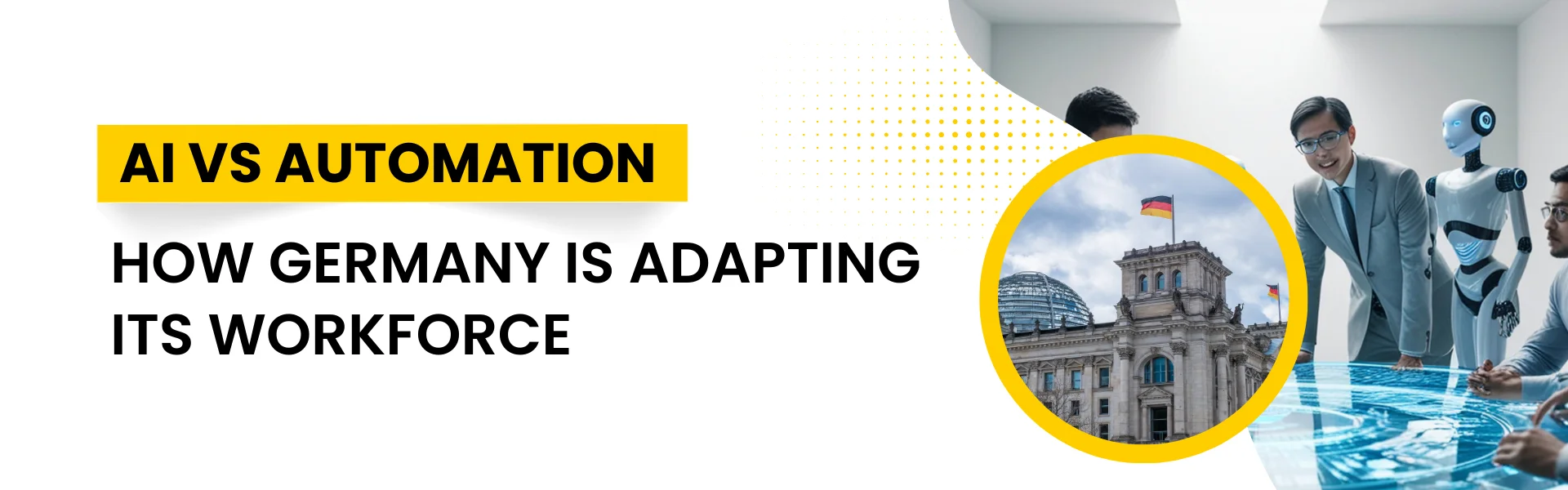
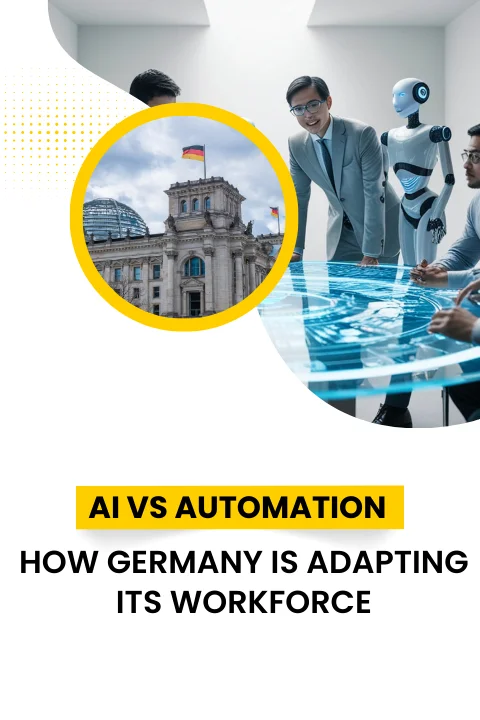
Germany is entering a decisive phase in its economic journey. Technology is no longer just improving efficiency; it is redefining how people work, learn, and grow. Artificial intelligence and automation are reshaping careers across industries, forcing students and professionals to rethink long-term plans.
Unlike many countries that react late, Germany is preparing early. The focus is not on replacing humans but on upgrading skills. This balanced approach makes Germany a strong example of how future jobs can evolve without social disruption. For anyone planning a global career, understanding this shift is no longer optional. It is essential.
Automation and AI are often used as the same term, but they are not. Automation is rule-based. It follows fixed instructions to perform repetitive tasks. Think of robotic arms on factory floors or software that processes payroll every month.
AI goes a step further. It learns from data, adapts to patterns, and improves decisions over time. This is where artificial intelligence in Germany is creating deeper value. AI does not just execute tasks. It supports analysis, prediction, and problem-solving.
The key difference is impact. Automation reduces manual effort. AI reshapes job roles. Germany’s strategy clearly favours transformation over elimination.
Germany’s strength lies in its industrial heritage. Engineering, automobiles, machinery, and chemicals have shaped its economy for decades. Automation was introduced early in these sectors, which helped workers become comfortable with machines long before AI arrived.
What truly supports this transition is the germany education system. It blends academic learning with real-world exposure through vocational training, apprenticeships, and applied research. Students graduate with practical skills that industries actually need.
Today, artificial intelligence in Germany is being layered onto this strong foundation, allowing innovation without chaos.
Manufacturing continues to lead adoption, with smart robots adjusting operations in real time. Logistics uses predictive tools to manage supply chains and reduce delays. Healthcare applies AI to diagnostics, imaging, and patient data. Finance relies on intelligent systems for fraud detection and risk assessment.
While some repetitive roles are declining, new roles are emerging rapidly. Data analysts, AI system supervisors, digital operations managers, and compliance specialists are in demand. This shift is driving growth in AI jobs in Germany, especially in technology hubs and industrial regions.
The message is clear. Routine work is shrinking. Cognitive and analytical work is expanding.
Germany remains highly attractive to global talent. Engineers, IT professionals, analysts, and researchers find strong demand and stable working conditions. Many international learners choose to study in germany because education is affordable and closely linked to industry needs.
Students benefit from internships, part-time roles, and campus opportunities. Access to student jobs in Germany helps them gain practical exposure while supporting living expenses.
For international professionals, technical skills matter more than perfect language fluency. Germany values competence, reliability, and long-term contribution.
German companies are known for long-term planning. Most organizations invest heavily in reskilling rather than layoffs. Employees are trained to work alongside AI tools instead of competing with them.
Digital learning platforms, short certification programs, and role-based training paths are common. Government-supported initiatives help small and medium enterprises adapt without financial stress.
In Germany, learning is continuous. Skills are treated as assets, not expenses.
Germany remains highly attractive to global talent. Engineers, IT professionals, analysts, and researchers find strong demand and stable working conditions. Many international learners choose to study in germany because education is affordable and closely linked to industry needs.
Students benefit from internships, part-time roles, and campus opportunities. Access to student jobs in Germany helps them gain practical exposure while supporting living expenses.
For international professionals, technical skills matter more than perfect language fluency. Germany values competence, reliability, and long-term contribution.
The biggest lesson from Germany’s approach is mindset. Jobs will change faster than degrees can. Those who focus only on titles may struggle. Those who focus on skills will grow.
Critical thinking, data literacy, adaptability, and collaboration are becoming essential across roles. AI is not replacing ambition. It is amplifying it. Germany’s workforce model proves that stability comes from preparation, not resistance.
Germany is not fighting technology. It is guiding it. By aligning education, industry, and policy, the country is creating a workforce ready for the future.
For students and professionals, this is an opportunity, not a threat. Learn continuously. Adapt early. The future of work in Germany belongs to those who grow with change, not those who fear it.
Ans. AI will change tasks, not remove careers. Most roles will evolve rather than disappear.
Ans.Yes, numerous public and private universities have fully English programs.
Ans. YES Germany offers economic stability, strong labor laws, and a future-focused workforce strategy.

As the days pass by Germany is increasingly becoming the go-to dream destination for students aspiring to pursue their higher education abroad.
German Education Consultant

© 2026 YES Germany. All Rights Reserved.
WhatsApp us
