
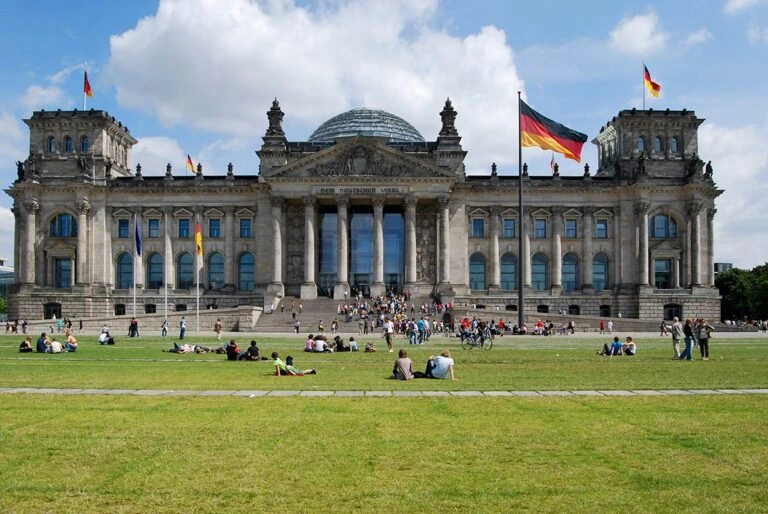
 🏛️ Reichstag · Berlin
A guide for Indian MBA applicants: how a German MBA differs from a Master's in Management, what leading programmes actually charge, the work-experience and GMAT rules they set, and which scholarships genuinely accept MBA students.
Share your details and a YES Germany counsellor will help you shortlist MBA programmes that fit your profile and budget.
Germany combines Europe's largest economy with business schools that work closely with industry. Here is what an MBA in Germany can realistically offer an Indian applicant, and what to check before you commit.
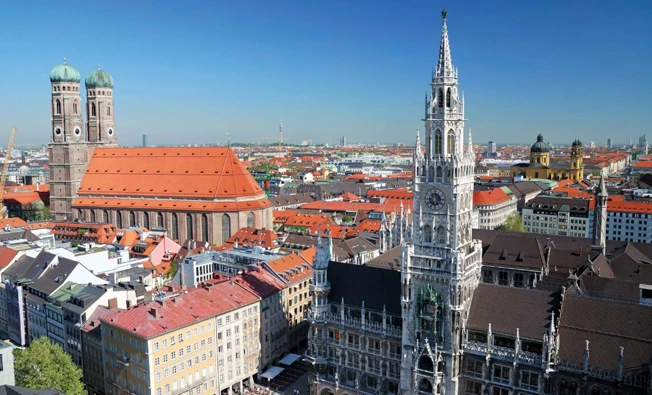
Germany is home to groups such as BMW, Siemens, SAP, Mercedes-Benz, Bosch, Allianz, BASF and Deutsche Bank, so MBA projects, internships and recruiting often run through automotive, manufacturing, technology and finance.
Germany's leading full-time MBAs generally cost less than top US and UK programmes, and many are a single year. MBAs are still fee-paying programmes, including those run by public universities, so compare real fees (see MBA fees).
Company projects, case work and internships are built into many programmes, giving you German work experience and contacts before you graduate.
Many German MBAs aimed at international applicants are taught in English, and German is usually not an admission requirement for them, but it helps with internships, jobs and everyday life.
Graduates of German universities can apply for a residence permit of up to 18 months to look for qualified work. From there, the EU Blue Card and other skilled-worker permits each have their own conditions (see careers and work rights).
MBA cohorts in Germany are often highly international, and a German residence permit lets you travel within the Schengen area for short stays.
Both are management degrees, but they are built for different stages of a career. Choosing the right one is the first decision for most Indian applicants.
| Factor | MBA | Master's in Management / M.Sc. (Management, Business Administration) |
|---|---|---|
| Type of degree | Professional, post-experience degree | Academic, usually pre-experience degree |
| Work experience | Usually required; often several years | Usually not required; open to recent graduates |
| Who it suits | Professionals moving into management, switching function or sector, or preparing for senior roles | Graduates starting a business career, or those who want a research-based management degree |
| Typical length | About 12–24 months | About 2 years (4 semesters) |
| Tuition | Fee-paying, including MBAs run by public universities | Often low at public universities (semester contribution); some states and universities charge non-EU students |
| Teaching | Case studies, team projects, leadership and career development | Theory, methods and research, with a master's thesis |
| Admission tests | GMAT or GRE required or waivable, depending on the school | Some programmes ask for GMAT/GRE; many do not |
| Programme | Fees for non-EU students | Work experience | GMAT / GRE |
|---|---|---|---|
| TUM: M.Sc. Management and TechnologyTechnical University of Munich · 4 semesters · English (some specialisations partly German) | €4,000 per semester at present, plus the semester fee. TUM has announced higher master's fees (€4,600 or €6,800 per semester) for new students from winter 2027/28 | Not required | GMAT required for applicants with an Indian bachelor's degree |
| University of Mannheim: Mannheim Master in Management (M.Sc.)4 semesters · English | €1,500 per semester (Baden-Württemberg non-EU fee) plus a €194 semester fee | Not required; counts in selection | Not required; counts in selection |
| University of Cologne: M.Sc. Business Administration4 semesters · English | No tuition; semester contribution €355.65 (winter 2026/27) | Not required | Optional; adds ranking points |
Sources: TUM, TUM tuition fees, University of Mannheim, University of Cologne (checked November 2026). Under German accreditation rules, professional ("continuing education") master's programmes, the category MBAs belong to, require at least one year of qualified professional experience (KMK model regulation, §5).
Comparing in more detail? Read MBA vs MS in Germany, our guide to the Master's in Management in Germany and the wider overview of management and MBA courses in Germany.
German MBAs differ in format as much as in subject. Pick the format that fits your experience and whether you can relocate, then choose a specialisation.
| Format | Typical length | Who it suits | Examples (see the comparison below) |
|---|---|---|---|
| Full-time MBA | 12–21 months | Professionals ready to move to Germany and study full-time; the usual route for Indian applicants on a student visa | Mannheim, ESMT, WHU, Frankfurt School, HHL, HWR Berlin, Pforzheim, GISMA |
| Part-time / blended MBA | About 24 months | People who keep working while they study, with online and on-campus phases | ESMT Berlin Part-time MBA |
| Executive MBA | 18–24 months, modular | Experienced professionals and managers, usually with more years of experience than full-time MBA students | TUM Executive MBAs, University of Cologne Executive MBA |
| Specialised MBA | Varies | Applicants with a clear sector focus, such as finance or technology | TUM Executive MBA in Business & IT; finance focus at Frankfurt School |
Part-time and executive formats are mainly designed for people living and working in or near Germany. If you will need a German student visa, check with the school whether the format qualifies before you apply.
Four tracks most Indian MBA applicants ask us about.
A broad MBA covering strategy, marketing, operations and leadership, suited to professionals moving into management or switching function.
Combines management with technology, a natural fit for Indian B.Tech graduates with industry experience who target automotive, manufacturing and technology employers.
Frankfurt is Germany's financial centre, home to the European Central Bank, the Bundesbank and many banks. A finance focus leads towards banking, risk, fintech and corporate-finance roles.
Designed for experienced professionals. Modular, part-time formats let you keep working while you study.
Each programme sets its own rules, so treat these as the points to check, not a universal standard. The table under universities and business schools shows the actual requirements of individual programmes.
A recognised bachelor's degree. Some programmes also set a minimum number of credits or a grade threshold, and an Indian three-year degree may need checking against the programme's credit rules.
One of the most important admission factors. Full-time MBAs commonly ask for a few years of professional experience; executive MBAs expect more, often including leadership experience.
Requirements vary: some schools require a GMAT or GRE score, some accept either or offer an in-house test, and some can waive it for strong profiles. Check the programme's own rule before you book a test.
Proof of English, usually IELTS or TOEFL, unless the school accepts other evidence such as an English-medium degree. Minimum scores differ by school.
A CV, essays or a statement of purpose, recommendation letters and an admission interview are typical. Your career goals carry real weight in MBA selection.
Indian applicants normally need an APS certificate for the German student visa, and from the 2027 intakes many commerce, business and engineering graduates also take the dMAT test. Start early. See APS and visa requirements below.
A GMAT or GRE score is not required by every German MBA, but the leading business schools usually expect one or a recognised alternative, and a good score can also support scholarship applications. If you would rather apply without a test, we shortlist programmes that admit on your academics, experience and interview; see MBA in Germany without GMAT.
Usually not for a conventional MBA: German MBAs are post-experience degrees, and most set a minimum number of years. The rule is programme-specific, though, so a few programmes accept shorter experience. If you are a recent graduate, a Master's in Management or M.Sc. in Business is normally the better route, and you can consider an MBA later in your career. We check every shortlisted programme's exact requirement during your free counselling.
These are actual MBA programmes, checked on each school's own website in November 2026. A university's name alone does not tell you it offers an MBA, so we list the programme, who runs it and what it asks for. Fees are in the fees section below.
| School and type | Programme and format | Work experience | GMAT / GRE | Accreditation |
|---|---|---|---|---|
| Mannheim Business SchoolBusiness school of the public University of Mannheim (run as a non-profit company) | Mannheim Full-Time MBAFull-time · 12–15 months · English | 3+ years after graduation | GMAT or GRE required | AACSB, EQUIS, AMBA |
| ESMT BerlinPrivate, non-profit business school | Full-time MBA15 months · EnglishPart-time MBA24 months · about 75% online · English | 3+ years after graduation | Required: GMAT, GRE, Executive Assessment or ESMT's own test (waivable for some part-time applicants) | AACSB, EQUIS, AMBA |
| WHU – Otto Beisheim School of ManagementPrivate, state-recognised, university status | Full-Time MBA12 months · Düsseldorf · English | 2+ years after graduation | One of several admission routes; can be waived | AACSB, EQUIS |
| Frankfurt School of Finance & ManagementPrivate, state-recognised | Full-time MBA12 months · English | 3+ years after graduation | GMAT, GRE or Executive Assessment preferred; school's own test as alternative | AACSB, EQUIS, AMBA |
| HHL Leipzig Graduate School of ManagementPrivate, state-approved, university status | Full-time MBA15–21 months · English | Generally 2+ years | Required: GMAT, GRE or HHL Entry Test | AACSB |
| Technical University of Munich (TUM)Public university | Executive MBA; Executive MBA in Business & ITPart-time, modular · 4 semesters · English | 3+ years full-time after first degree | Not listed as a requirement | AACSB, EQUIS, AMBA (TUM School of Management) |
| University of ColognePublic university | Executive MBA (part-time)18 months · alternate Fridays and Saturdays · English | 4+ years after first degree | Not listed as a requirement | EQUIS (faculty) |
| HWR BerlinPublic university of applied sciences (Berlin Professional School) | Berlin Full-Time MBA15 months · English (C1) | 3 years after graduation | GMAT strongly recommended for non-EU applicants | AMBA |
| Pforzheim UniversityPublic university of applied sciences | MBA International ManagementFull-time · 16–21 months · English | 2 years | GMAT or GRE expected; waiver possible with a very good GPA | AACSB |
| GISMA University of Applied SciencesState-recognised private | Global MBAFull-time · 12 months · Potsdam · English | 3+ years | Not required | AMBA |
Reading the table: TUM's MBA is its Executive MBA; its M.Sc. in Management and Technology is a Master's in Management, not an MBA. Likewise, the University of Mannheim's own master's degrees are separate from the MBA run by Mannheim Business School. Some executive MBAs, such as RWTH Aachen's Executive MBA Technology Management, are taught in German. Before you apply, check that the school is a state or state-recognised higher education institution in the Hochschulkompass register.
Accreditation checked against the AACSB, EQUIS (EFMD) and AMBA lists and the schools' own pages, November 2026. Our guides: University of Mannheim, TUM and the top universities in Germany for MBA.
MBA fees depend on the programme, not just on whether a school is public or private. Use the institution types below as a guide, then compare the real programme fees that follow.
| Institution type | What students should expect |
|---|---|
| Public universities | Fees vary by programme. Consecutive master's degrees (M.Sc.) often charge only a semester contribution, but some states and universities charge non-EU students tuition, and MBAs run by public universities and universities of applied sciences are fee-paying (for example HWR Berlin, Pforzheim, TUM, Cologne below). |
| Public university-affiliated business schools | MBA programmes may have separate, substantial tuition fees, set by the business school rather than the university (for example Mannheim Business School). |
| Private business schools | Tuition varies considerably depending on programme, duration and institution, from around €20,000 to over €50,000 for the programmes below. |
| Programme | Tuition | Applies to | Notes |
|---|---|---|---|
| HWR BerlinBerlin Full-Time MBA · public | €19,900 | Sep 2027 start | Total fee; instalments possible · source |
| Pforzheim UniversityMBA International Management · public | €4,600 per semester | Current rate; may rise to €4,900 from winter 2027/28 | Plus a registration fee of about €207 per semester · source |
| GISMAGlobal MBA · private | €22,500 | 2026 intakes (2027 fees not yet published) | Includes application, enrolment and exam fees · source |
| Frankfurt SchoolFull-time MBA · private | €42,000 | Sep 2027 start | Plus a €600 enrolment fee · source |
| ESMT BerlinPart-time MBA · private | €42,000 | Sep 2027 start | 24 months, mostly online · source |
| TUMExecutive MBA programmes · public | €42,900 | Current intakes | Same fee for all TUM Executive MBAs; student union fee extra · source |
| HHL LeipzigFull-time MBA · private | €43,500 | Current intake | Includes a term abroad; early-application discounts · source |
| University of CologneExecutive MBA · public | €44,900 | Sep 2027 start | €39,900 if you apply by 30 Nov 2026; semester contribution extra · source |
| Mannheim Business SchoolMannheim Full-Time MBA | €49,500 | Sep 2027 start | Plus a €150 application fee · source |
| WHUFull-Time MBA · private | €49,500 | Current published fee | Includes international-module costs; early-bird discounts · source |
| ESMT BerlinFull-time MBA · private | €50,000 / €51,000 | Jan 2027 / Jan 2028 start | Jan 2027 applications close 15 Dec 2026 · source |
Fees as published by each school, checked November 2026. Fees change every year, so confirm the current figure on the school's site before you apply. Budget separately for application or enrolment fees, any semester contribution, living costs and travel.
Three different numbers often get mixed up: the money the visa asks you to prove, what you actually spend each month, and rent, which depends heavily on the city.
€11,904 a year (€992 a month) in 2026. This is the minimum the German authorities ask you to prove for a student visa. It is a legal requirement, not an estimate of what life in Germany costs, and it is reviewed regularly.
Food, transport, health insurance, phone and personal costs. Students typically spend more than the visa figure once rent is included, especially in large cities.
Usually the largest cost. A room in a shared flat in Munich or Frankfurt can cost twice as much as one in Leipzig or Dresden. Start your search as soon as you have an admit.
| Expense | Munich / Frankfurt (High) | Berlin / Hamburg (Mid) | Leipzig / Dresden (Lower) |
|---|---|---|---|
| Accommodation (shared flat or student room) | €550 – €800 | €400 – €600 | €280 – €420 |
| Food & groceries | €250 | €220 | €180 |
| Transport (Deutschlandticket) | €63 | €63 | €63 |
| Health insurance (statutory student rate) | €141 – €146 | €141 – €146 | €141 – €146 |
| Phone, internet, personal | €150 | €130 | €110 |
| Monthly total | €1,154 – €1,409 | €954 – €1,159 | €774 – €919 |
Rent and living figures are indicative ranges for planning, not quotes; your costs depend on the city, housing type and lifestyle. The Deutschlandticket rises to €66.80 from January 2027. The statutory student health insurance rate (example: TK, 2026) ends at the latest with the semester in which you turn 30, so many MBA students pay a higher rate. The visa amount is set by the German government: see the German Missions in India. More detail: cost of studying in Germany and student accommodation in Germany.
Funding for MBAs in Germany comes mainly from the business schools themselves, as partial tuition reductions. Eligibility depends on the scheme, the school, your background and the programme, so we list only options we could verify as open to MBA applicants.
| Funding programme | Who can apply | Do MBAs qualify? | What it covers | Deadline / official source |
|---|---|---|---|---|
| Mannheim Business School scholarships | Applicants to the Mannheim Full-Time MBA (2027 intake); one category per applicant | Yes | Tuition reduction: up to €6,000 in six categories (e.g. Finance, Consulting, Future Female Business Leader); up to €9,500 for the need-based Distinguished Talent award | Mostly rolling; Distinguished Talent 31 Jan or 31 May · source |
| ESMT Berlin scholarships | Self-funded Full-time MBA applicants; apply for up to three, receive one | Yes | Tuition only: e.g. Asia regional (up to €8,000), Women in Leadership (€8,000), Dean's Excellence (€15,000); some automatic awards for strong test scores | With your application · source |
| WHU Full-Time MBA scholarships | Full-Time MBA applicants; one per person (includes awards for participants from developing countries, women and diversity) | Yes | Partial tuition reductions set individually | Rolling; APS applicants apply by 30 Apr · source |
| HHL Leipzig MBA scholarships | Full-time MBA applicants (regional incl. Asia Pacific, Women in Business, Young Leader and others) | Yes | Partial tuition reduction; Dean's List covers half of tuition | Before the programme starts; final deadline 30 Jun · source |
| Frankfurt School MBA scholarships | Full-time MBA applicants (sector-specific, Women in Business, Diversity); apply for up to two, receive one | Yes | Up to 30% of tuition | Indian applicants advised to apply by end of April · source |
| Deutschlandstipendium | Students of any nationality at participating state or state-recognised universities; selected by the university | Depends on the university | €300 a month; cannot be combined with most other merit scholarships | Set by each university · source |
| DAAD EPOS (development-related courses) | Graduates from eligible countries, including India, with at least two years' professional experience, applying to listed courses | Only listed courses | €992 a month plus insurance and travel allowances. The 2026/27 list includes one MBA: Small Enterprise Promotion and Training (SEPT) at Leipzig University | Course-specific deadlines · source |
Not usually MBA routes: DAAD's general master's scholarship (Study Scholarships – Master Studies for All Academic Disciplines) does not currently accept applicants from India and does not cover tuition. The large political foundations do not target MBA programmes and generally expect B2 German. Many schools also offer early-application discounts, which are separate from scholarships.
Loans: an education loan can fund tuition, but for the visa it is additional to, not a replacement for, the required financial proof. Read more: scholarships in Germany and DAAD scholarships.
Checked on the official pages, November 2026. Amounts and categories change by intake.
Indian MBA applicants deal with three official steps after the admit: the APS certificate, proof of financial resources and the visa application itself. Requirements depend on your circumstances, so always use the German Missions' current checklist.
The German Missions in India state that an APS certificate is mandatory unless an exemption applies (for example a non-German degree or a German or EU public scholarship). What counts is that your documents were issued in India, not your nationality.
New for 2027: applicants with a bachelor's in commerce, accounting, finance, economics, business administration, management studies or any B.Tech/B.Eng also take the dMAT test as part of APS, from the summer semester 2027 intake. The APS fee is INR 18,000; there is no fixed processing time.
The current requirement is €11,904 for the first year (2026). A blocked account is the most common way to show it, but not the only one: the Missions also accept a formal declaration of commitment (Verpflichtungserklärung) from a sponsor living in Germany, or a German or EU scholarship.
An education loan is additional to this proof, and an Indian affidavit of support is not accepted instead. At a private school you also show the fee amount and that the first year's fees, or a substantial deposit, have been paid.
You apply online through the Consular Services Portal, whose questionnaire determines the visa category for your case, and book your appointment through VFS Global. The Missions may ask for additional documents.
Typical documents include your admission letter, APS certificate, financial proof, health insurance, passport and language certificates, but the list depends on your situation. The visa fee is €75.
Official sources checked November 2026. The financial-proof amount is reviewed regularly and may change for 2027, so confirm it with the German Missions in India before you apply.
Most German MBAs start in September, with some January and April intakes. Business schools use application rounds, and several set an earlier final deadline for applicants who need APS or a visa, so plan backwards from that date.
| Programme | Start | Deadline for international applicants |
|---|---|---|
| ESMT Berlin Full-time MBA | January | Jan 2027 intake closes 15 Dec 2026; Jan 2028 applications open |
| Mannheim Full-Time MBA | September 2027 | Rounds from 30 Nov 2026; final deadline for APS applicants 30 Apr 2027 |
| WHU Full-Time MBA | September | APS applicants by 30 Apr; early-bird discounts for earlier applications |
| Frankfurt School Full-time MBA | 1 September 2027 | Rolling admissions; non-EU applicants by 31 May 2027 |
| HHL Leipzig Full-time MBA | September | Non-EU applicants by 31 May |
| Pforzheim MBA International Management | September / March | Visa applicants by 15 June (September entry) or 15 December (March entry) |
| TUM Executive MBA | October / April | Autumn start by 1 September; spring start by 1 March |
Indian applicants: allow time for the APS certificate, an English test and any GMAT or GRE before the deadline, then for the visa appointment after your admit. Applying in an early round also improves your chances of scholarships and early-application discounts where a school offers them.
Where an MBA leads in Germany depends on the sector you target, your specialisation and the experience you bring. An MBA does not guarantee a job or a particular salary; it strengthens a profile that employers still assess individually.
| Sector | Main hubs | Roles MBA graduates often target | Background that helps |
|---|---|---|---|
| Automotive & mobility | Munich, Stuttgart, Wolfsburg, Ingolstadt | Strategy, product and programme management, purchasing, sales | Engineering degree, automotive or supplier experience |
| Industrial manufacturing | Baden-Württemberg, Bavaria, North Rhine-Westphalia | Operations, business development, controlling, plant and project management | B.Tech plus operations or project experience |
| Technology & digital transformation | Berlin, Munich, Hamburg, Walldorf | Product management, digital strategy, IT and SaaS sales, transformation roles | IT, software or product experience |
| Financial services | Frankfurt, Munich | Corporate finance, risk, banking, insurance, fintech | Finance, commerce or banking experience; a finance specialisation |
| Supply chain & logistics | Hamburg, Bremen, Duisburg, Frankfurt | Supply chain planning, procurement, logistics management | Operations, procurement or logistics experience |
| Management consulting | Munich, Frankfurt, Düsseldorf, Berlin, Hamburg | Consultant, strategy and in-house consulting roles | Strong academics, prior consulting or analytical work; German is a plus |
The Blue Card salary figures are legal minimums for that permit, not typical salaries. Official details: EU Blue Card and the 18-month permit (Make it in Germany, German government portal), and the settlement rules in Section 18c of the Residence Act. Read more: jobs and work visa after study and Blue Card and PR after study.
YES Germany alumni who studied in Germany and now work at leading German and international companies.
 Shivam AroraVolkswagen
 JasmineMercedes-Benz
 Gagan MadanSivantos Group
 Shivam PathakAmazon
 Manas AbrolAirbus
An MBA application is judged on your experience and goals as much as your grades. Our counsellors focus on the decisions that matter for MBA applicants, then help with the paperwork that follows.
Shortlisting MBA programmes that match your academic record, years of work experience and career goal.
Weighing full-time, part-time, executive and specialised MBAs against a Master's in Management for your profile.
Checking each programme's work-experience rule and whether it needs GMAT, GRE, IELTS or TOEFL, so you prepare only for what you need.
Understanding the full tuition, what is included, and which scholarships or education loans fit your case.
Your CV, essays, statement of purpose and recommendation letters, plus interview preparation.
Guidance on the APS certificate, your proof of financial resources and the student visa procedure.
From your first counselling call to arrival in Germany, each service below links to our detailed guide.
A side-by-side look at what matters most: cost, post-study visa, PR pathway and entry tests.
| Factor | 🇩🇪 Germany | 🇺🇸 USA | 🇬🇧 UK | 🇨🇦 Canada |
|---|---|---|---|---|
| Typical Tuition | MBAs about €20,000–€51,000 in total at the programmes listed on this page; public M.Sc. programmes often much less | Charged at all universities | Charged at all universities | Charged at all universities |
| Post-Study Work Visa | 18 months | 12 months OPT (up to 36 for STEM-designated degrees) | 18 months (Graduate Route, from Jan 2027) | Up to 3 years (PGWP, depends on programme length) |
| Route to PR | Settlement permit after 21 months (B1 German) or 27 months (A1 German) on an EU Blue Card, subject to conditions | Employer-sponsored green card; H-1B is lottery-based | Settlement after several years on a work visa | Express Entry and provincial programmes |
| GMAT Required? | Required or expected at leading schools, not at every programme | At most leading MBAs | At most leading MBAs | At most leading MBAs |
| English Programmes | Many, at public and private schools | All | All | All |
| Best For | Tech, engineering, finance, PR seekers | Elite finance, consulting | Short MBA, UK job market | PR + mid-tier MBA |
Visa rules as of October 2026; they change often, so check before you apply. Compare with India too: MBA in Germany vs Indian B-schools.
Still have questions? Our counsellors answer these every day. Book a free call for anything specific to your profile.
MBA tuition depends on the programme. Among the programmes on this page, fees run from €19,900 (HWR Berlin Full-Time MBA) to €50,000–€51,000 (ESMT Berlin Full-time MBA), with Mannheim and WHU at €49,500; Pforzheim’s public MBA charges €4,600 per semester. Living costs come on top: the student visa currently asks for proof of €11,904 for one year (2026), and real spending, especially rent, is often higher.
Usually not for a conventional MBA. German MBAs are post-experience degrees, and the programmes on this page ask for at least two to four years. Recent graduates normally apply for a Master’s in Management or M.Sc. instead. The rule is programme-specific, so check each school’s exact requirement.
Not at every programme. Mannheim requires a GMAT or GRE, HHL requires a GMAT, GRE or its own entry test, ESMT requires a test but accepts its own, WHU offers other admission routes, and GISMA does not require one. Note that TUM’s M.Sc. in Management and Technology, which is not an MBA, requires a GMAT from applicants with an Indian bachelor’s degree.
There is no guaranteed salary: pay depends on your role, sector, city, prior experience and German skills. The EU Blue Card minimum salary (€50,700 in 2026, or €45,934.20 for shortage occupations and recent graduates) is a legal threshold for that permit, not a typical MBA salary.
Graduates of German universities can apply for a residence permit of up to 18 months to look for qualified work, and may take up any job during that time. EU Blue Card holders can apply for a settlement permit after 21 months with B1 German or 27 months with A1 German, subject to conditions; graduates of German universities in qualified employment may qualify after two years, with B1 German and 24 months of pension contributions.
Business schools use application rounds, and several set earlier final deadlines for applicants who need APS or a visa: for example 30 April 2027 at Mannheim and WHU, and 31 May for non-EU applicants at Frankfurt School and HHL. ESMT’s January 2027 intake closes on 15 December 2026. Start 9 to 12 months ahead to allow for APS, tests and essays.
In almost all cases, yes. The German Missions in India state that an APS certificate is mandatory unless an exemption applies, for example a non-German degree or a German or EU public scholarship. What counts is that your documents were issued in India. From the summer semester 2027 intake, commerce, business, economics and engineering graduates also take the dMAT test as part of APS. Read our APS certificate guide.
Currently €11,904 for one year (2026). A blocked account is the most common way to show it, but the German Missions in India also accept a formal declaration of commitment from a sponsor living in Germany, or a German or EU scholarship. The amount is reviewed regularly, so confirm it with the German Missions in India before you apply.
Choose a state or state-recognised German higher education institution (listed in the Hochschulkompass register). In India, the equivalence of a foreign degree is assessed case by case by the Association of Indian Universities (AIU) and, under rules in force since April 2025, through the UGC. Ask us to check a programme before you apply.
A degree from a state or state-recognised German university or business school is a recognised German higher-education qualification. International accreditation such as AACSB, EQUIS or AMBA, shown in our comparison table, is a further sign of business-school quality. How an employer or authority in another country treats the degree is decided by that country.
Yes. An M.Sc. in International Management is an academic master’s degree that usually admits graduates without work experience and ends with a thesis. An MBA is a professional, post-experience degree focused on management practice. Your experience level usually decides which one fits.
Yes, you can prepare and apply while you work, since applications, tests and interviews are largely online. To study a full-time MBA you need to move to Germany. Part-time and executive formats, such as ESMT’s Part-time MBA or TUM’s Executive MBAs, are designed for people who keep working, mostly in or near Germany, so check the visa position with the school first.
Many are. Among the schools on this page, Mannheim Business School, ESMT Berlin, Frankfurt School and the TUM School of Management hold all three; WHU holds AACSB and EQUIS; HHL Leipzig and Pforzheim hold AACSB; the University of Cologne’s faculty holds EQUIS; HWR Berlin and GISMA hold AMBA. Accreditation belongs to the school, so check the accreditors’ current lists.
Within an MBA you usually shape your focus through electives or concentrations during the programme, so some flexibility is common. Moving to a different degree programme normally means a new application. The rules differ by school, so ask before you enrol.

The German business schools worth shortlisting, with fees and admission requirements.
Read Article →
Top colleges that admit Indian students without a GMAT score.
Read Article →
How to go from student visa to EU Blue Card to permanent residence.
Read Article →
Which degree fits your background, budget and career goals.
Read Article →
A cost-benefit comparison for Indian MBA aspirants.
Read Article →
Eligibility for MS and MBA in Germany with an Indian Bachelor's.
Read Article →We'll map your profile to the right-fit MBA programmes, look at your scholarship options, and tell you exactly what to do next.
As the days pass by Germany is increasingly becoming the go-to dream destination for students aspiring to pursue their higher education abroad.
German Education Consultant

© 2026 YES Germany. All Rights Reserved.
WhatsApp us