
India +91-8070606070

Dubai +971 561111568



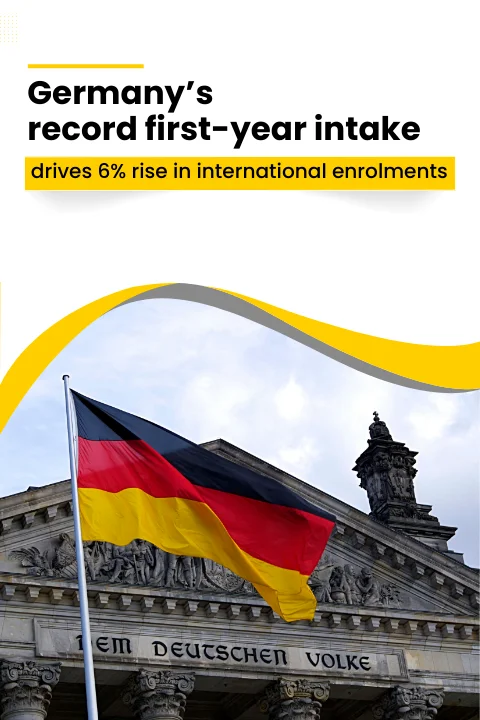
Germany has once again demonstrated why it is one of the best countries in the world to study. With a record-breaking first-year intake, the nation has witnessed a remarkable 6% growth in international enrollments, a testament to the increasing global faith in the Germany education system for international students. Affordable education and low (or no) tuition fees at public universities, combined with world-class institutions and a good research infrastructure, are reasons why the country continuously attracts students from all over the world. Furthermore, Germany’s robust economy and transparent career pathways post-graduation are what are propelling Germany forward in the race for international education. Prominent study abroad organisations like Yes Germany emphasise that this increase is due to a series of long-term factors, such as policy stability, the increasing number of programs taught in English and reforms with the student in mind aimed at opening Germany up and making it more accessible and friendly to international students.
The 6% increase in the number of international students is a result of rising applications from Asia, Africa and Eastern Europe. With the clear application procedure in Germany, the growing number of English-taught programs and the more visa-friendly approach, it is now easier to access than ever before. Education counsellors like Yes Germany say international students see Germany not just as a country to study but as a long-term academic and career investment, as opposed to a one-time study destination.
One of the biggest attractions is Germany education without tuition fees for foreigners at public universities. Students pay only minimal semester contributions, making Germany highly cost-effective. The benefits of studying in Germany for international students are globally recognised degrees, infrastructure and research, and exposure to industry. Such value for the quality of life and education is not something countries can offer.

Germany has expanded its range of English-taught bachelor’s and master’s degree programs in the fields of engineering, IT, business and data science. That has broken down linguistic barriers for a lot of students. Guidance platforms like Yes Germany often recommend English-taught courses as an ideal entry point, with students gradually learning German for better integration and job opportunities.
One big factor for the increase in enrollment is the prospect of Germany post study work opportunities for international students. Graduates may remain for up to 18 months to seek employment and may then obtain residence permits or EU Blue Cards upon employment. With a high need for professionals, Germany guarantees career stability and permanent settlement opportunities.
The pros are particularly clear in the Germany study abroad advantages and disadvantages. Although learning German and adjusting to a new culture may take a while, the cost savings and career benefits are not to be underestimated. Many students throughout the world are curious and want to know, Is Germany better than Canada for international students? In terms of tuition costs, Germany clearly wins, while Canada may offer easier language integration. However, Germany’s industrial strength and free education make it a top contender.

German universities are increasingly international, resulting in multicultural classrooms and global collaborations in research. This diversity enhances the quality of the university and the world rankings. Universities are also spending more on services to support students, housing and career advice to handle an expanding international student body.
The Government of Germany and the DAAD remain committed to international education through scholarships, research grants and integration offers. Visa processing has been fast-tracked, and routes for employment after study have been simplified. Education advisors such as the Study Abroad Consultant in Faridabad and the Study Abroad Consultant in Delhi also guide students in making the best use of these schemes.
With continued policy support and rising global demand, Germany’s international student numbers are expected to grow steadily. Yes Germany experts foresee a continuous increase in the number of students, especially in the areas of STEM and sustainability, which will make Germany an education hub for the future.
Germany’s record-breaking first-year intake and a 6 per cent increase in overall international students undoubtedly highlight the strength of its education system, value for money, and career prospects. With public university tuition that is free and above-average post-study work opportunities, Germany has previously put students planning an international future in great financial shape. Sure, there might be a few challenges to face — like getting used to a different culture or brushing up on your German — but the scholarly and professional rewards you’ll be reaping down the road certainly make it a worthwhile endeavour. Leading study abroad experts such as Yes Germany agree that Germany is again the preferred destination for international students worldwide pursuing quality education, global exposure and secured career opportunities.

Due to tuition-free education, English-taught programs, and strong job opportunities.
Yes, most public universities offer education with no tuition fees.
Students can stay up to 18 months after graduation to find a job.
Germany is more affordable, while Canada may be easier linguistically.
Scholarships, simplified visas, and strong career pathways through DAAD initiatives.
As the days pass by Germany is increasingly becoming the go-to dream destination for students aspiring to pursue their higher education abroad.
German Education Consultant

© 2026 YES Germany. All Rights Reserved.
WhatsApp us