
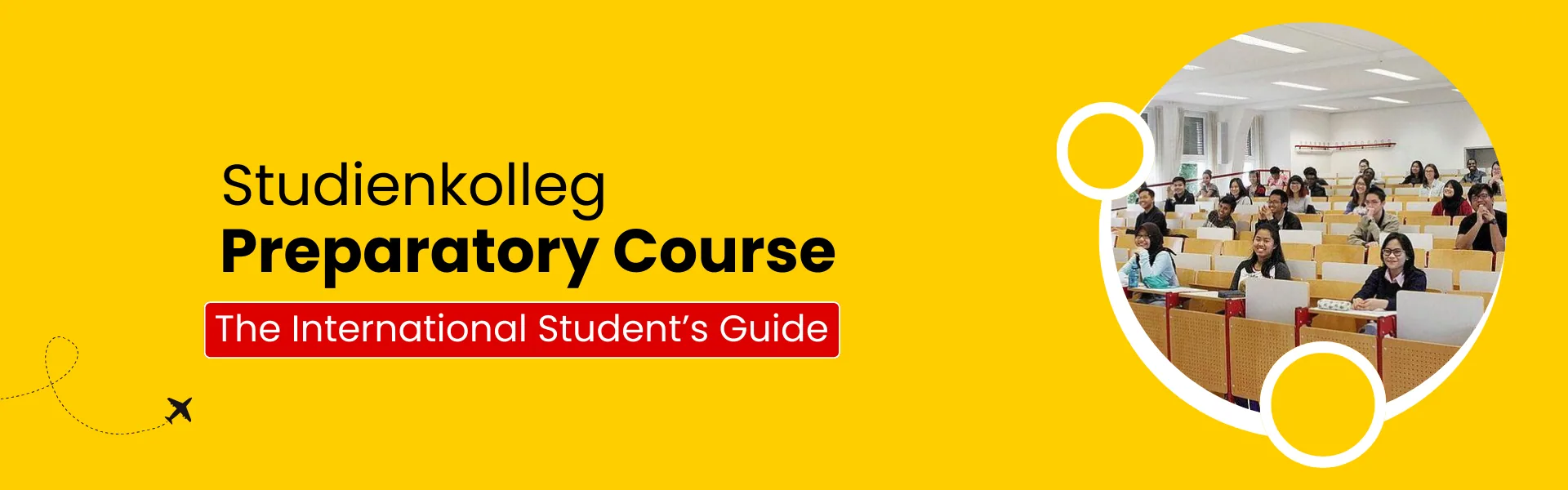
Dreaming of a world-class education? Studying in Germany opens doors to innovation and global career opportunities. However, for many international students, the path to a degree begins with a vital bridge: the Studienkolleg.
If your high school diploma isn’t automatically recognized as equivalent to the German Abitur, don’t worry, you aren’t disqualified. You simply need a one-year preparatory course to get you up to speed.
A Studienkolleg in Germany is a specialized preparatory college designed to prepare international students for the academic rigors of German universities. Over two semesters, you’ll focus on German language proficiency and subject-specific modules (like the T-course for Tech or W-course for Business) to pass the Feststellungsprüfung (FSP)—the final assessment that qualifies you for university entry.
Choosing where to study is a strategic decision. Here is how public Studienkolleg in Germany and private Studienkolleg in Germany stack up against each other:
A public Studienkolleg in Germany is the “gold standard” for budget-conscious students. Since they are state-funded, you only pay a small semester contribution (usually €200-€400). However, because they are free, the competition is fierce. You must pass a grueling Aufnahmeprüfung (entrance exam) just to get a seat.
If you want to avoid the high-stress entrance exams of public institutions, a private Studienkolleg in Germany is an excellent alternative. These colleges often offer more frequent start dates, English-taught support, and intensive coaching. While they charge tuition, they provide a much higher success rate for students aiming for top-tier bachelor’s in Germany.
Feature | Public Studienkolleg | Private Studienkolleg |
Tuition Fees | Nearly Free (Semester fee only) | €5,000 – €15,000 per year |
Admission | Highly Competitive (Entry Test) | Flexible / Direct Admission |
Class Size | Larger (approx. 20-30 students) | Small & Personalized (approx. 10-15) |
Recognition | Recognized at all German Universities | Must check for “State-Recognized” FSP |
You cannot just study “everything.” You must pick a specialized track based on your intended Bachelors in Germany:
To successfully study in Germany, follow this timeline:
Completing a preparatory course doesn’t just get you into university; it integrates you into the German academic culture. It’s the secret weapon for international students to maintain a high GPA during their actual degree.
Whether you choose a public studienkolleg in germany for its cost-effectiveness or a private studienkolleg in germany for its personalized support, this year of preparation is an investment in your future.
Yes, From 2024, international students can work 140 full days or 280 half days per year, though the course is very intensive.
Public ones are tuition-free but highly competitive, while private ones charge fees but offer guaranteed spots and flexible entry.
Yes, you must prove you have approximately €11,904 in a blocked account to secure your student visa for the year.
Most institutions allow you to repeat the exam once, usually after attending the second semester a second time.
Yes, a certificate from a state-recognized Studienkolleg allows you to apply for your specific subject at any university in Germany.
As the days pass by Germany is increasingly becoming the go-to dream destination for students aspiring to pursue their higher education abroad.
German Education Consultant
© 2026 YES Germany. All Rights Reserved.
WhatsApp us
