For Winter Semester 2027/28 and Summer Semester 2028

Top 15 Universities in Germany for Indian Students

Choosing a university in Germany involves more than comparing rankings. Indian students need to evaluate academic eligibility, English- or German-taught programmes, tuition fees, living expenses, application deadlines, and the documents required for admission.

This guide covers 15 universities in Germany worth exploring, compares public and private higher education, and explains how to prepare for the application process for the Winter 2027/28 and Summer 2028 intakes.

Use it to build a shortlist based on your preferred subject, previous qualifications, budget, and long-term career plans. Always confirm programme-specific information on the university's official website before applying.

421Higher education institutions (WS 2025/26)
112Universities among them
18 monthsPost-study job-search permit
€11,904Blocked account for one year

Sources: Destatis and the German Missions in India. See Useful Official Resources.

Check My University Match

Plan your university search: share your details and a YES Germany counsellor will help you shortlist suitable programmes.

    Check Your Eligibility

    Key Facts to Know Before Applying

    🏛️
    Public university fees

    Many public universities do not charge general tuition fees for standard Bachelor's and consecutive Master's programmes. Exceptions apply, including at certain universities, in some federal states, and for specific programmes.

    🗣️
    English-taught programmes

    Availability depends on the subject and degree level. Do not assume that a university offering English-taught Master's programmes also offers your preferred Bachelor's degree in English.

    📅
    Application deadlines

    Deadlines vary by university, programme, applicant category, and application route.

    📋
    APS certificate

    Indian applicants should check whether APS verification is required for their academic qualifications and intended study pathway.

    💼
    Post-study opportunities

    Eligible graduates may apply for a residence permit to seek qualified employment for up to 18 months, subject to the applicable conditions.

    Read more: APS certificate, blocked account, German student visa, and working in Germany after study.

    Why Germany

    Why Study in Germany? Top Universities for Indian Students

    Germany offers research-focused universities, a wide range of academic disciplines, and opportunities to pursue selected Bachelor's and Master's programmes in English or German. For Indian students, choosing the right university means looking beyond rankings to compare course eligibility, language requirements, tuition fees, location, and career goals.

    According to Germany's Federal Statistical Office (Destatis), the country had 421 higher education institutions in the winter semester 2025/26, including 112 universities. Many public universities do not charge general tuition fees for standard Bachelor's and consecutive Master's programmes, although exceptions apply. Students should also budget for semester contributions and living expenses.

    When shortlisting universities, Indian applicants can explore institutions including the Technical University of Munich (TUM), LMU Munich, Heidelberg University, RWTH Aachen University, Karlsruhe Institute of Technology (KIT), Humboldt University of Berlin, and the University of Freiburg. Each has different academic strengths, programme requirements, and language options.

    Before applying, verify the following for your chosen degree:

    • Academic eligibility: Check whether your previous qualifications meet the programme's entry requirements.
    • Language of instruction: Confirm whether the course is taught in English, German, or both.
    • Tuition and living costs: Review the university's current fee policy and estimate accommodation and other expenses.
    • Application requirements: Check deadlines, APS requirements, accepted language tests, and any programme-specific assessments.

    For verified information, consult DAAD's guide to studying in Germany and its International Programmes database.

    Shortlist 2027/28

    Top 15 Universities in Germany for Indian Students

    The following is a selected list of established German universities, not a universal ranking from first to fifteenth. Their order should not be interpreted as a ranking of academic quality or suitability for every student.

    Before finalising your shortlist, check the current QS World University Rankings if rankings matter to your decision, alongside the university's own programme catalogue.

    1Bavaria

    Technical University of Munich (TUM)

    📍 Location: Munich, Bavaria

    The Technical University of Munich is a research-oriented university known for its academic offerings across engineering, computing, natural sciences, management, and related interdisciplinary fields.

    Fields to explore: Informatics, engineering, data-related disciplines, natural sciences, and management.

    Read moreRead less
    Tuition feesTUM charges tuition to many new students from non-EU/EEA countries. The applicable fee depends on the programme and degree level, and exemptions may apply. Do not use a single fee figure for every course or assume that current fees will remain unchanged for 2027/28.

    Application tip: Check both academic eligibility and the tuition category for your specific degree before applying.

    2Bavaria

    Ludwig Maximilian University of Munich (LMU Munich)

    📍 Location: Munich, Bavaria

    LMU Munich offers programmes across the humanities, social sciences, natural sciences, medicine, and other research-oriented disciplines. Its range of English-taught opportunities is particularly relevant to students exploring postgraduate study.

    Fields to explore: Economics, physics, life sciences, biochemistry, humanities, and other research-focused subjects.

    Read moreRead less
    Tuition feesReview the university's current information on tuition, semester contributions, and any programme-specific charges. Costs should not be assumed to be identical across all study options.

    Application tip: Check the language requirements and subject prerequisites for the exact programme, particularly if you are applying for a Master's degree.

    3Baden-Württemberg

    Heidelberg University

    📍 Location: Heidelberg, Baden-Württemberg

    Heidelberg University is a research university with academic offerings in the natural sciences, life sciences, law, economics, humanities, social sciences, theology, and medicine.

    Fields to explore: Molecular biosciences, scientific computing, physics, economics, and other research-led disciplines.

    Read moreRead less
    Tuition feesBaden-Württemberg generally charges eligible non-EU/EEA students €1,500 per semester for relevant degree programmes, subject to exemptions. Semester contributions may apply separately.

    Application tip: Check the language of instruction, subject-specific admission criteria, and the state's international tuition rules before applying.

    4Berlin

    Freie Universität Berlin (Free University of Berlin)

    📍 Location: Berlin

    Freie Universität Berlin offers programmes across the humanities, social sciences, natural sciences, and interdisciplinary research areas. It is worth exploring for students interested in international studies and research-led academic pathways.

    Fields to explore: Political science, social sciences, biochemistry, earth sciences, regional studies, and selected international programmes.

    Read moreRead less
    Tuition feesCheck the current semester contribution and any programme-specific charges. Do not treat the absence of general tuition as confirmation that studying in Berlin will be inexpensive overall.

    Application tip: Confirm whether the programme accepts direct applications or uses uni-assist, and allow time for any preliminary document review.

    5North Rhine-Westphalia

    RWTH Aachen University

    📍 Location: Aachen, North Rhine-Westphalia

    RWTH Aachen University is an important option for students interested in engineering, technology, applied sciences, and research-oriented education.

    Fields to explore: Mechanical engineering, production engineering, computer science, materials-related disciplines, and mobility-related subjects.

    Read moreRead less
    Tuition feesCheck the fee rules for the exact degree. Standard university programmes and continuing-education offerings can have different cost structures. Semester contributions should be checked separately.

    Application tip: Distinguish between a degree offered directly by RWTH and a continuing-education programme offered through a separate institutional unit.

    6Baden-Württemberg

    Karlsruhe Institute of Technology (KIT)

    📍 Location: Karlsruhe, Baden-Württemberg

    Karlsruhe Institute of Technology combines university-level education with research across engineering, computing, natural sciences, and related areas.

    Fields to explore: Informatics, information engineering, materials science, energy systems, and mobility.

    Read moreRead less
    Tuition feesEligible non-EU/EEA students are generally subject to Baden-Württemberg's international tuition rules, including the €1,500-per-semester fee where applicable. Exemptions and additional semester contributions may apply.

    Application tip: Check the required school or university qualifications, language proficiency, and any subject-specific selection requirements.

    7Berlin

    Humboldt University of Berlin

    📍 Location: Berlin

    Humboldt University of Berlin offers academic programmes across the humanities, social sciences, life sciences, mathematics, law, and other research disciplines.

    Fields to explore: Economics, mathematics, life sciences, humanities, law, and social sciences.

    Read moreRead less
    Tuition feesCheck the current semester contribution and programme-specific charges. The institution's public status does not remove the need to budget for accommodation, insurance, and other living expenses.

    Application tip: Compare the programme's academic focus and entry requirements rather than relying on the university's overall reputation.

    8Berlin

    Technical University of Berlin (TU Berlin)

    📍 Location: Berlin

    TU Berlin offers study opportunities across engineering, computer science, architecture, planning, natural sciences, and technology-related fields.

    Fields to explore: Computer engineering, information and communication technology, industrial engineering, architecture, and urban planning.

    Read moreRead less
    Tuition feesCheck the programme's fee policy and the current semester contribution. Confirm the language of instruction before shortlisting a degree.

    Application tip: Students interested in technology or architecture should check whether the chosen programme requires a portfolio, an aptitude assessment, or additional academic prerequisites.

    9Saxony

    TU Dresden

    📍 Location: Dresden, Saxony

    TU Dresden offers programmes across engineering, computing, natural sciences, and interdisciplinary research. It is worth considering for students seeking a research-oriented university in eastern Germany.

    Fields to explore: Distributed systems, nanoelectronics, biotechnology, hydrosciences, and engineering.

    Read moreRead less
    Tuition feesCheck the current semester contribution and programme-specific fee rules. Do not assume that the costs or admission requirements are the same for every degree.

    Application tip: Confirm the required language certificates, academic prerequisites, and application route for your chosen programme.

    10North Rhine-Westphalia

    University of Bonn

    📍 Location: Bonn, North Rhine-Westphalia

    The University of Bonn is a research-oriented institution offering study opportunities in mathematics, economics, agricultural sciences, life sciences, and other academic disciplines.

    Fields to explore: Mathematics, economics, agricultural sciences, astrophysics, and life sciences.

    Read moreRead less
    Tuition feesCheck the current semester contribution and any programme-specific charges. Budget separately for accommodation, health insurance, and personal expenses.

    Application tip: Check the academic prerequisites carefully, especially for research-intensive Master's programmes that require a closely related Bachelor's degree.

    11Hamburg

    University of Hamburg

    📍 Location: Hamburg

    The University of Hamburg offers programmes across climate research, economics, natural sciences, social sciences, and other disciplines.

    Fields to explore: Integrated climate system sciences, economics, molecular life sciences, and peace research.

    Read moreRead less
    Tuition feesCheck the current university fee information and the admission requirements of your chosen programme. Semester contributions and living expenses should be considered separately.

    Application tip: Students interested in climate science and interdisciplinary research should examine the exact curriculum and any subject-specific prerequisites.

    12Bavaria

    Friedrich-Alexander-Universität Erlangen-Nürnberg (FAU)

    📍 Location: Erlangen and Nuremberg, Bavaria

    Friedrich-Alexander-Universität Erlangen-Nürnberg, commonly known as FAU, offers a broad range of programmes across engineering, natural sciences, medicine, business, law, and the humanities. Its presence in Erlangen and Nuremberg also makes it important to check the actual campus location of the degree you intend to pursue.

    Fields to explore: Artificial intelligence, computer science, engineering, materials science, life sciences, economics, and business-related disciplines.

    Read moreRead less
    Tuition feesDo not assume that every programme is tuition-free. Check FAU's current fee rules for international students, including any programme-specific charges and exemptions, along with the semester contribution.

    Application tip: Confirm the campus, teaching language, academic prerequisites, and application route. These details can differ between programmes and degree levels.

    13Baden-Württemberg

    University of Tübingen

    📍 Location: Tübingen, Baden-Württemberg

    The University of Tübingen offers programmes across natural sciences, medicine, humanities, social sciences, and other research fields. It is worth exploring for students interested in interdisciplinary study and research-led education.

    Fields to explore: Machine learning, bioinformatics, neural information processing, economics, and life sciences.

    Read moreRead less
    Tuition feesEligible non-EU/EEA students are generally subject to Baden-Württemberg's international tuition rules, including the €1,500-per-semester fee where applicable. Exemptions and semester contributions may affect the total cost.

    Application tip: Check whether your previous qualification meets the specific academic and subject requirements of the intended programme.

    14Baden-Württemberg

    University of Freiburg

    📍 Location: Freiburg, Baden-Württemberg

    The University of Freiburg offers research-oriented study across natural sciences, life sciences, environmental fields, humanities, and social sciences.

    Fields to explore: Environmental sciences, renewable-energy-related research, neuroscience, and other science-based disciplines.

    Read moreRead less
    Tuition feesEligible non-EU/EEA students are generally subject to Baden-Württemberg's €1,500-per-semester tuition fee for applicable degree programmes, with exceptions. Semester contributions may be additional.

    Application tip: Check the programme's language requirements and whether your previous academic subjects meet its entry criteria.

    15Hesse

    Technical University of Darmstadt (TU Darmstadt)

    📍 Location: Darmstadt, Hesse

    TU Darmstadt is a research-oriented technical university with academic offerings across engineering, computer science, natural sciences, and interdisciplinary technology-related fields. It is worth considering for students interested in advanced technical education and research.

    Fields to explore: Computer science, artificial intelligence, electrical engineering, mechanical engineering, materials science, and information technology.

    Read moreRead less
    Tuition feesCheck the current semester contribution and any programme-specific charges. Fee policies should be verified for the intended intake rather than assumed from the university's public status.

    Application tip: Review the exact programme's academic prerequisites, language requirements, and application deadline before applying.

    💡 What to Compare Before Applying

    For every university on your shortlist, check:

    • The official programme title and degree level.
    • Language of instruction and accepted language certificates.
    • Academic eligibility and subject prerequisites.
    • Tuition fees, semester contributions, and exemptions.
    • Application route and deadline for your intake.
    • Required documents, tests, and selection procedures.
    • Campus location and local living costs.

    Important: There is no single Winter 2027/28 or Summer 2028 deadline for all universities. Use the official deadline for each programme and applicant category.

    Compare

    University Comparison Table for Indian Students

    A side-by-side view of type, academic fit, language planning, and tuition considerations for the 15 universities above.

    UniversityTypeBest known for strong academic fitLanguage planningTuition-fee consideration
    1. Technical University of Munich (TUM)PublicEngineering, technology, computer science, and managementCheck programme language, especially for Bachelor’s degreesNon-EU students generally pay tuition for eligible new Bachelor’s and Master’s programmes. Rates vary by programme.
    2. LMU MunichPublicHumanities, social sciences, natural sciences, and medicineGerman is important for many programmes; selected Master’s degrees are taught in EnglishCheck programme-specific fees and semester contributions
    3. Heidelberg UniversityPublicMedicine, life sciences, natural sciences, and research-led disciplinesProgramme-dependent; German is required for many degreesNon-EU students generally pay €1,500 per semester for covered degree programmes in Baden-Württemberg, subject to exemptions.
    4. Free University of BerlinPublicHumanities, social sciences, political science, and life sciencesGerman and English options depend on the degreeGenerally no tuition fees for regular programmes, but semester contributions apply; exceptions exist.
    5. RWTH Aachen UniversityPublicEngineering, technology, applied sciences, and technical researchCheck the language requirements for the selected degreeVerify programme-specific charges and semester contributions
    6. Karlsruhe Institute of Technology (KIT)PublicEngineering, computing, natural sciences, and technologyProgramme-dependent; check German-language requirements carefullyCheck the applicable Baden-Württemberg tuition rules for non-EU students
    7. Humboldt University of BerlinPublicHumanities, social sciences, law, and natural sciencesLanguage availability varies by programmeCheck the programme and semester contribution; do not assume all costs are zero
    8. Technical University of Berlin (TU Berlin)PublicEngineering, computer science, architecture, and urban planningConfirm whether the chosen degree is taught in German or EnglishCheck programme-specific charges and semester contributions
    9. TU DresdenPublicEngineering, computing, natural sciences, and technologyProgramme-dependentVerify the current fee and semester-contribution rules
    10. University of BonnPublicMathematics, economics, natural sciences, and researchCheck the programme’s language of instructionReview semester contributions and any programme-specific fees
    11. University of HamburgPublicNatural sciences, social sciences, humanities, and climate researchGerman is required for many degrees; English options varyCheck the current semester contribution and any programme-specific charges
    12. FAU Erlangen-NürnbergPublicEngineering, medicine, natural sciences, and business-related fieldsProgramme-dependent, with language requirements varying by degreeVerify current fees and semester contributions
    13. University of TübingenPublicLife sciences, medicine, humanities, and AI-related researchCheck the language requirements for the chosen courseBaden-Württemberg’s non-EU tuition rules may apply to covered degrees
    14. University of FreiburgPublicEnvironmental sciences, life sciences, medicine, and humanitiesProgramme-dependent; German is important for many degreesCheck Baden-Württemberg’s tuition rules for non-EU students
    15. TU DarmstadtPublicEngineering, computer science, electrical engineering, and technical researchGerman-language proof is required for German-taught degrees; English options depend on the programmeCheck current semester contributions and any programme-specific charges

    Important note: The academic-fit descriptions are intended as a shortlist, not a ranking of departmental quality. Programme availability, language of instruction, admission criteria, and fees can change.

    Compare

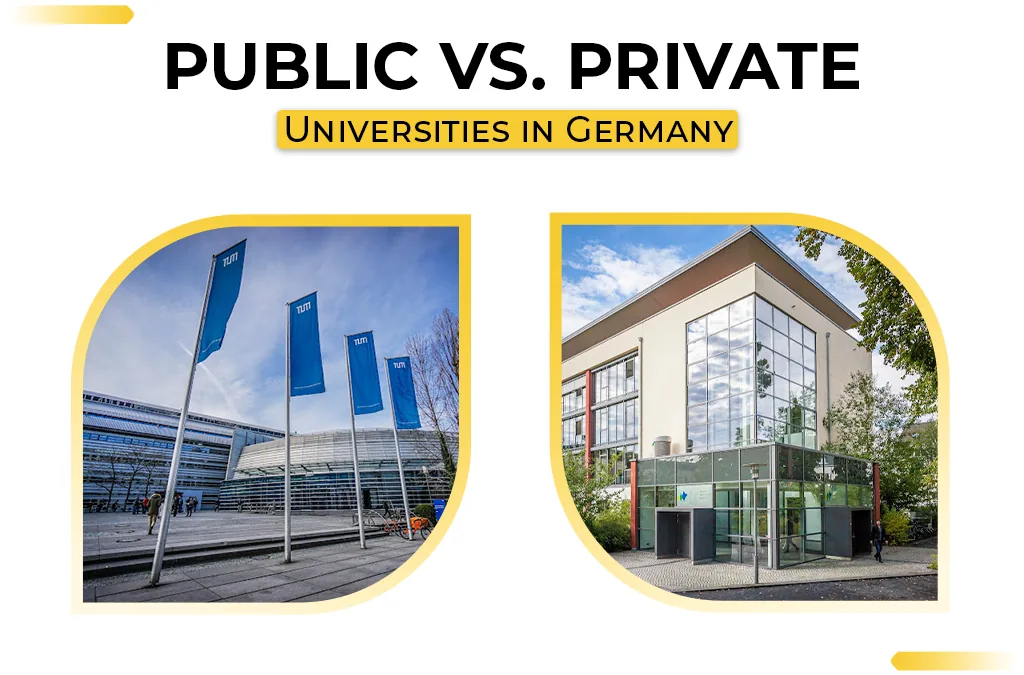
    Public vs. Private Universities in Germany

    Both public and private institutions can be appropriate choices. The decision should depend on programme suitability, recognition, teaching approach, cost, and career goals.

    All 15 universities featured in this list are public institutions. However, public status does not automatically mean that every programme is tuition-free. Tuition policies vary by university, degree programme and student eligibility, so Indian applicants should check the latest official fee information before applying.

    FactorPublic universitiesPrivate universities
    TuitionMany standard programmes have no general tuition fee, but exceptions applyTuition is commonly charged
    Academic focusOften broad research and academic portfoliosVaries; some focus on specialised or professionally oriented programmes
    LanguageGerman- and English-taught programmes, depending on the degreeEnglish-taught options are available at some institutions
    AdmissionRequirements vary; some programmes are highly selectiveRequirements vary and may include interviews or assessments
    Class sizeDepends on the institution and courseDepends on the institution and course
    Best suited toStudents seeking particular academic, research, or subject pathwaysStudents seeking a specific programme or teaching model

    💡 YES Germany's University Selection Tip

    Do not choose a university based on public or private status alone. Compare the exact degree, institutional recognition, curriculum, faculty, tuition, language requirements, practical learning opportunities, and career outcomes.

    For private institutions, confirm the institution's recognised status and the degree's accreditation or recognition where applicable. For public universities, verify whether the particular programme charges tuition despite the institution's public status.

    Read more: How much does it cost to study in Germany? · Public vs. private universities in Germany

    Eligibility

    Admission Requirements for German Universities

    There is no single admission checklist that applies to every German university or programme. Requirements depend on your previous qualifications, degree level, subject, language of instruction, and the institution's selection process.

    🎓

    Academic Qualifications

    For Bachelor's programmes

    Your school-leaving qualifications must meet Germany's higher education entrance requirements. Depending on your academic history and qualification, you may qualify for direct admission or need an additional pathway, such as Studienkolleg and the relevant assessment examination.

    Indian applicants should check the latest APS guidance and the applicable recognition criteria for the intended intake. Eligibility rules can change.

    For Master's programmes

    You generally need a recognised Bachelor's degree in a relevant field. Universities may specify subject prerequisites, credit requirements, minimum grades, aptitude assessments, or relevant professional experience.

    A four-year Bachelor's degree is not a universal requirement for every German Master's programme. Eligibility depends on the qualification and the individual programme's rules.

    🗣️

    English Language Proficiency

    English-taught programmes may require IELTS, TOEFL, or another accepted proof of English proficiency. The required score, test type, and validity period vary by programme.

    Some universities may accept alternative evidence of English proficiency. Do not assume that a Medium of Instruction certificate or Duolingo score will be accepted everywhere.

    🇩🇪

    German Language Requirements

    German-taught programmes generally require proof of German proficiency at the level specified by the university. Accepted certificates and minimum levels vary.

    English-taught programmes may not require German for admission, but learning German can be useful for daily life, internships, and employment.

    📝

    Standardised Tests

    GRE, GMAT, GATE, or other tests may be required or considered by selected programmes. No single test is universally mandatory across German universities.

    Check the exact programme's admissions page before booking a test or paying a registration fee.

    📋

    APS Certificate for Indian Applicants

    The Academic Evaluation Centre India (APS India) verifies academic documents and qualifications issued by Indian educational institutions. An APS certificate is generally part of the documentation required for German student-visa applications within its scope, although exemptions apply.

    APS does not decide university admission or issue visas. Applicants should use the official APS website to identify the correct procedure and document checklist.

    Important for the 2027 intake

    APS India has introduced the Digital Master Test (dMAT) as an additional documentation requirement for selected Master's applicants in specified fields, including engineering, commerce/accounting/finance/economics, and business/management. Under the published rules, the requirement applies to affected applicants for Summer Semester 2027 and subsequent Master's intakes, subject to transitional exemptions.

    Because this may affect Winter 2027/28 applications, check the latest affected-fields list and eligibility rules before submitting your APS application.

    Read more: APS certificate · APS certificate for Germany study visa: a full guide · dMAT for Indian students · German student visa requirements

    Checklist

    Document Checklist for German University Applications

    Prepare documents according to the exact requirements of your university, degree, and application route. Not every applicant needs every document listed below.

    A

    Academic Documents

    • Passport or other identification required by the application portal.
    • Class X and Class XII certificates and mark sheets, where applicable.
    • Bachelor's degree certificate and transcripts for Master's applications.
    • Master's degree certificate and transcripts, where required for further study.
    • Grading scale or explanation of the grading system, if requested.
    • Proof of current enrolment or provisional graduation documents, where accepted.
    • Certified copies or official translations, where required.
    B

    Language and Programme-Specific Documents

    • Accepted English language test results, if required.
    • Accepted German language certificate, if required.
    • GRE, GMAT, GATE, or other test results, where required.
    • CV or résumé in the format requested by the programme.
    • Statement of purpose or motivation letter, where required.
    • Letters of recommendation, where required.
    • Portfolio or work samples for relevant programmes.
    • Proof of relevant work experience, internships, or practical training, if required.
    C

    APS and Application-Route Documents

    • APS certificate, where applicable.
    • The correct APS checklist for your academic background.
    • dMAT certificate, if required under the current APS rules for your Master's application.
    • uni-assist application documents, if the university uses uni-assist.
    • VPD (Vorprüfungsdokumentation), if the university requires preliminary review documentation.
    • Application form, declaration, or other documents specified by the university.
    D

    Student-Visa Documents

    These documents belong to the visa process, not automatically to every university application.

    • University admission letter or other qualifying proof of the intended study pathway, as applicable.
    • Proof of financial resources in an accepted form.
    • Required health insurance documentation.
    • Visa application form and passport photographs, if specified.
    • APS certificate, where required.
    • CV and other supporting documents listed in the current visa checklist.
    • Language evidence required for the visa procedure, where applicable.

    Important: The checklist is a planning aid, not a universal submission list. University admission, APS verification, and visa applications have different requirements. Follow the latest official instructions for each process and do not submit original documents unless explicitly requested.

    Cost Breakdown

    Tuition Fees and Cost of Studying in Germany

    Your study budget should include tuition where applicable, semester contributions, accommodation, food, health insurance, transport, study materials, and personal expenses.

    Many public universities do not charge general tuition fees for standard Bachelor's and consecutive Master's programmes, but the following exceptions and distinctions matter:

    • Baden-Württemberg generally charges eligible non-EU/EEA students €1,500 per semester for applicable programmes, subject to exemptions.
    • Some Bavarian universities, including TUM, charge tuition to many non-EU/EEA students.
    • Private universities and specialised programmes may charge substantially higher fees.
    • Semester contributions are separate from tuition and vary by institution.
    • Living costs depend on the city, housing arrangement, and personal circumstances.

    Read more: How much does it cost to study in Germany? · Cost of living in Germany for Indian students

    Tuition and Other Costs to Compare

    ExpenseWhat to check
    TuitionCurrent fee rules for your programme and student category
    Semester contributionAmount charged by your university for the relevant semester
    AccommodationUniversity housing availability and private rental costs
    Health insuranceRequirements and cost for your circumstances
    Food and transportExpected monthly expenses in the city where you will study
    Study materialsBooks, software, equipment, and other course-related expenses
    Visa financial proofCurrent amount and acceptable evidence specified by the German Missions in India
    Blocked Account Requirement

    For student-visa applications, the German Missions in India list €11,904 for one year, with a maximum withdrawal of €992 per month, as one way to demonstrate sufficient financial resources under the published guidance.

    Other accepted forms of financial proof may apply. Because the required amount and acceptable evidence can change, check the official visa instructions before opening a blocked account or making a deposit.

    Read more: Blocked account in Germany

    Budgeting note: A blocked account demonstrates access to funds for living expenses. Do not add the entire blocked-account amount to your living-cost budget as if it were a separate fee on top of the same expenses.

    Funding

    Scholarships for Indian Students in Germany

    Scholarships can help eligible students cover tuition, living expenses, travel, or other study-related costs. Eligibility depends on the scholarship, degree level, academic background, nationality, subject, and selection criteria.

    Scholarship or funding routeWhat to know
    DAAD scholarshipsEligibility, funding, and deadlines depend on the individual scheme
    DeutschlandstipendiumProvides €300 per month to selected students; universities manage their application processes
    Erasmus Mundus Joint MastersScholarships may be available for eligible programmes and selected applicants
    Foundation scholarshipsEligibility and selection criteria differ by foundation
    University scholarshipsAvailability, funding, and deadlines vary by institution; check the university's official scholarship page

    Read more: Scholarships in Germany · DAAD scholarships · Scholarships for Indian students in Germany

    How to Prepare a Scholarship Application

    1. Identify schemes that match your academic level, nationality, and intended programme.
    2. Confirm that the scholarship supports your degree and intake.
    3. Review academic, language, and other eligibility criteria.
    4. Prepare the required transcripts, CV, motivation statement, and recommendations.
    5. Confirm the deadline and submission route on the official scholarship page.
    6. Check whether the award covers tuition, living expenses, travel, or only part of the total cost.

    🎓 Explore Scholarships for Your Profile

    Step-by-Step

    Step-by-Step Application Process for German Universities

    Start early. Programme deadlines, APS procedures, language tests, and document requirements vary.

    1

    Step 1. Shortlist Universities and Programmes

    Identify programmes that match your preferred subject, degree level, academic qualifications, language ability, budget, and career goals. Read the official programme page before adding a university to your shortlist.

    2

    Step 2. Check Academic Eligibility

    Compare your school or university qualifications with the programme's entry requirements. For Indian qualifications, consult the applicable official recognition and APS guidance.

    3

    Step 3. Check APS Requirements

    Determine whether you need APS verification and which procedure applies to your academic background. If you are applying for a Master's programme, check whether the current dMAT rules apply to you. Allow time for any required verification.

    4

    Step 4. Prepare Language Tests

    Take an accepted English or German language test if required. Check the minimum score, validity rules, and accepted alternatives directly with the university.

    5

    Step 5. Prepare Application Documents

    Collect academic records, certificates, transcripts, CV, motivation letter, recommendations, and any required portfolio or test results.

    6

    Step 6. Apply Through the Correct Route

    Some universities accept applications directly, while others use uni-assist. Certain institutions require a VPD from uni-assist before you submit your application to the university. Follow the instructions for your specific degree and intake. Read more: Uni-Assist Germany · Intakes in Germany for Indian students

    7

    Step 7. Track Your Application

    Monitor your application portal and email for missing documents, additional requests, admission decisions, and enrolment instructions. Respond within the stated deadlines.

    8

    Step 8. Arrange Finances, Visa, and Travel

    After reviewing the applicable requirements, arrange financial proof, health insurance, accommodation, and visa documentation. Follow the current instructions from the German Missions in India. Read more: German student visa requirements · Germany student visa checklist

    Application Deadline Reminder

    Winter Semester applications often have deadlines around 15 July, while Summer Semester deadlines often fall around 15 January. These are common reference dates, not universal deadlines.

    Some programmes close earlier, and international applicants may have different requirements or earlier deadlines. Applicants using uni-assist or a VPD process must allow sufficient time for document review as well.

    For Winter 2027/28 and Summer 2028, confirm the exact dates on each programme's official admissions page.

    Student Stories

    Student Experiences: Studying in Germany

    Student experiences can help applicants understand university selection, document preparation, and the transition to studying abroad. Meet YES Germany alumni who studied in Germany and now work there.

    Shivam Arora, YES Germany alumnus at VolkswagenShivam AroraVolkswagen
    Jasmine, YES Germany alumnus at Mercedes-BenzJasmineMercedes-Benz
    Gagan Madan, YES Germany alumnus at Sivantos GroupGagan MadanSivantos Group
    Shivam Pathak, YES Germany alumnus at AmazonShivam PathakAmazon
    Manas Abrol, YES Germany alumnus at AirbusManas AbrolAirbus

    🚀 Start Your Germany University Shortlist

    FAQ

    Frequently Asked Questions

    Answers to the most-asked questions about studying at Germany's universities.

    There is no single best university for every applicant. Compare universities based on your preferred programme, academic eligibility, teaching language, fees, location, and career goals.

    The total cost depends on tuition, semester contributions, accommodation, food, insurance, transport, and personal expenses. Prepare a budget based on your chosen university and city.

    APS verification is generally required for relevant Indian academic qualifications used in the German student-visa process, but exemptions apply. Check the current APS requirements for your academic background.

    No. Requirements vary by programme. Some English-taught degrees accept IELTS or TOEFL, while others may accept specified alternatives. Confirm the accepted evidence directly with the university.

    It depends on the programme. German-taught degrees generally require German proficiency, while English-taught degrees may require English instead. German can still be useful for daily life and employment.

    Yes, where the university and programme use uni-assist. Other institutions accept direct applications. If a VPD is required, follow the university’s instructions for submitting it.

    There is no single deadline for every German university. Some programmes have deadlines around 15 July, while others close earlier or follow different schedules. Check the official programme page.

    Eligible graduates of German higher education institutions may apply for a residence permit to seek qualified employment for up to 18 months, subject to applicable conditions. Read our guide to working in Germany after study.

    Not universally. Eligibility depends on the recognised qualification, subject relevance, credit requirements, and programme-specific admission rules.

    No consultancy should promise a university admission decision, scholarship award, or visa approval. Decisions are made by the relevant university, funding provider, or government authority.

    Ready to Plan Your Studies in Germany?

    Choosing a university becomes easier when you understand your academic eligibility, programme options, financial requirements, and application deadlines.

    YES Germany can help you explore suitable options and organise your application plan. Start by identifying your preferred subject, degree level, and intended intake, then verify every requirement using the relevant university's official information.

    ⏰ Final application reminder: Check programme-specific deadlines early, allow time for APS verification where required, review the latest dMAT rules if applicable, and confirm current financial and visa requirements before applying.

    Chat with us

    ENQUIRE NOW