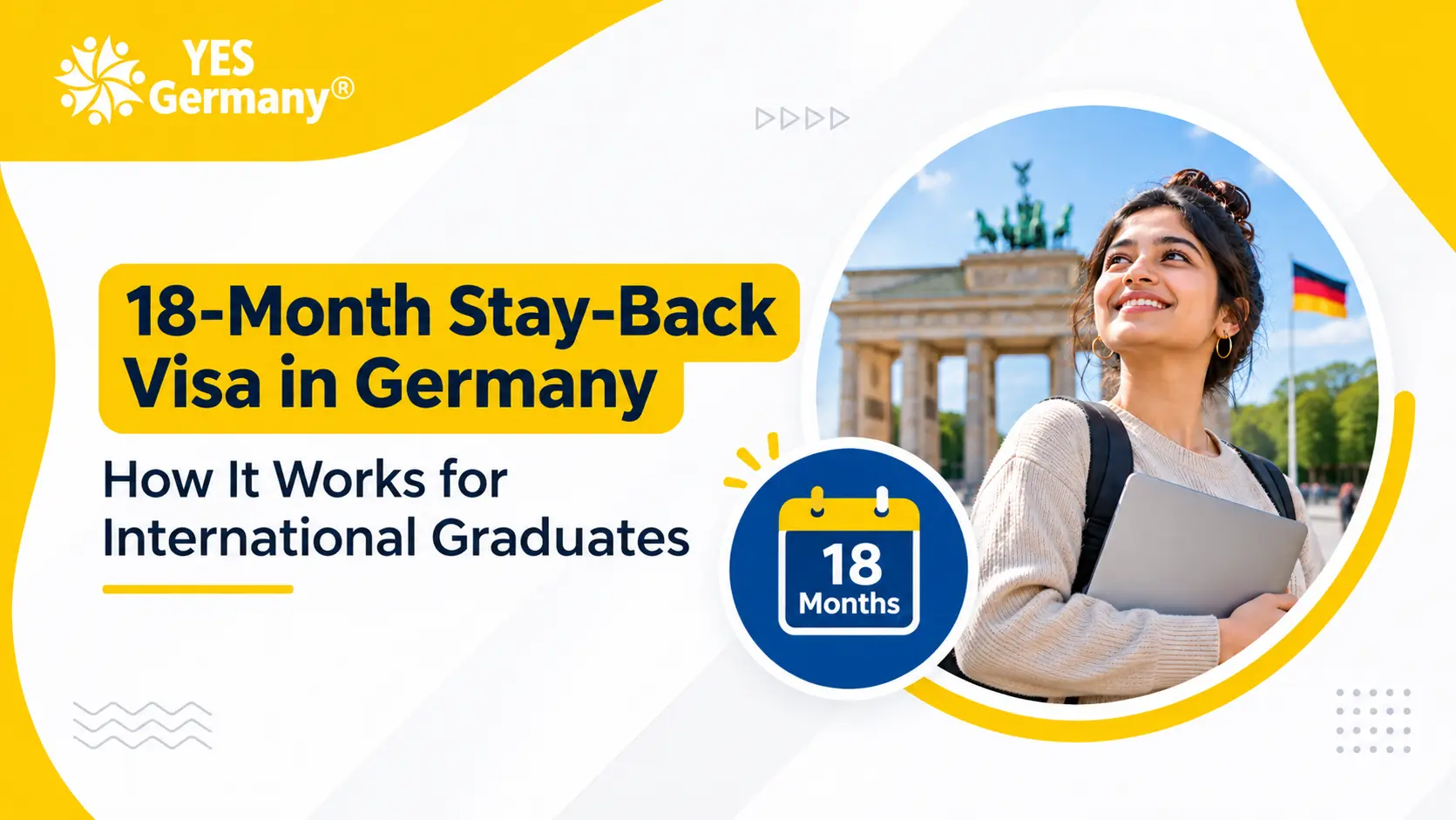
Completing a degree in Germany does not mean international students have to leave the country immediately after graduation. Germany offers eligible international graduates up to 18 months to find qualified employment and begin their professional careers.
Commonly called the 18-month stay-back visa in Germany, this provision allows graduates to remain in the country while searching for a suitable job. It also provides an opportunity to gain work experience and explore career opportunities in the German labour market.
However, the 18-month period comes with specific eligibility conditions, application requirements, and employment rules. Here is how it works.
What Is the 18-Month Stay-Back Visa in Germany?
Commonly known as the 18-month stay-back visa in Germany, this is legally a residence permit for jobseekers under Section 20 of Germany’s Residence Act (AufenthG). It allows eligible non-EU/EEA graduates of German universities and qualifying vocational training programmes to stay in Germany for up to 18 months to find employment matching their qualifications.
During this period, graduates can work in any occupation while searching for qualified employment. Applicants must demonstrate sufficient financial resources and apply to their local Foreigners’ Authority before their existing residence permission expires.
Read Section 20 of Germany’s Residence Act for the legal provisions.
Who Is Eligible for the 18-Month Stay-Back Permit?
Non-EU/EEA graduates may qualify for Germany’s 18-month stay-back permit if they meet the following requirements:
- Completed qualification: Successfully completed a degree at a recognised German higher education institution.
- Financial resources: Demonstrate the ability to cover living expenses during the job-search period.
- Health insurance: Maintain valid health insurance coverage in Germany.
- Valid passport: Hold a valid passport and provide the documents required by the local Foreigners’ Authority.
A job offer is not required to apply. The permit gives eligible graduates time to find employment that matches their qualifications.
For detailed requirements, refer to the German government’s official guidance on staying in Germany after graduation.
How to Apply for the 18-Month Stay-Back Visa in Germany
The application is generally handled by the local Foreigners’ Authority (Ausländerbehörde) in Germany. Graduates should begin the process before their existing student residence permit expires.
Follow these steps:
Step 1: Complete your degree
Successfully finish your academic programme and obtain proof of completion from your university. This may be a degree certificate or an official university confirmation, depending on the authority’s requirements.
Step 2: Contact the Foreigners’ Authority
Arrange an appointment with the immigration office responsible for your place of residence. It is advisable to initiate this process before completing your studies to avoid delays.
Step 3: Prepare the required documents
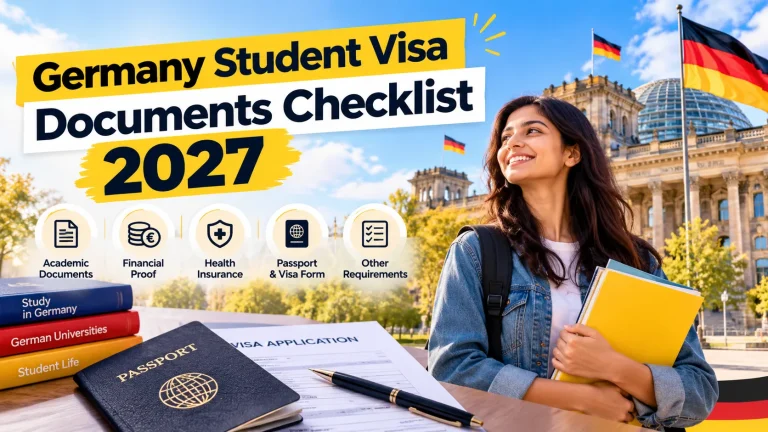
Commonly requested documents include:
- Valid passport
- Current residence permit
- University degree certificate or confirmation of successful completion
- Proof of sufficient financial resources
- Valid health insurance documentation
- Completed application form and biometric photograph, if requested
Document requirements and application procedures may vary between cities.
Step 4: Submit your application
Apply for the residence permit through the relevant Foreigners’ Authority and follow its instructions regarding appointments, fees, and additional documentation.
Do not assume that your student residence permit automatically converts into an 18-month stay-back permit.
Can You Work During the 18-Month Stay-Back Period?
Yes. Germany’s 18-month stay-back permit allows eligible graduates to take up any type of employment while searching for a job related to their qualifications. This means you can work in roles outside your field of study to support your living expenses during the job search.
Once you secure suitable, qualified employment, you can apply for the relevant residence permit, such as a Skilled Worker Residence Permit or EU Blue Card, provided you meet the respective eligibility requirements.
For official details, refer to the German government’s guidance on employment after graduation and Section 20 of the Residence Act.
What Happens After the 18 Months?
The 18-month residence permit is not renewable beyond the maximum permitted period under this job-search provision.
If you secure qualifying employment, you can apply to change your residence status to the appropriate employment category. If you do not find suitable employment, you must qualify for another residence title to remain in Germany. Otherwise, you will need to leave the country.
This makes it important to approach the stay-back period with a clear job-search strategy rather than treating it as an extension of student life.
How YES Germany Can Help You Prepare for Your Career in Germany
Planning your career in Germany should begin before graduation. Understanding employment opportunities, improving your German language proficiency, and preparing application documents can make the transition from university to professional life more manageable.
YES Germany supports students planning their education in Germany through services including university applications, German language training, APS guidance, and visa assistance. Students can also explore German language preparation to strengthen their communication skills before entering the job market.
For international graduates, the next step is to understand the residence requirements and identify employment opportunities that match their qualifications.
Frequently Asked Questions
1. Can I get the 18-month stay-back permit after completing vocational training in Germany?
Yes. Graduates who successfully complete qualifying vocational training in Germany can apply for a job-search residence permit for up to 18 months under Section 20(1) of the Residence Act.
2. Can I apply for this permit if I completed my degree outside Germany?
No. The 18-month post-study residence permit under Section 20(1) applies to eligible qualifications completed in Germany. Graduates with foreign qualifications may explore alternatives such as the Opportunity Card, subject to its eligibility requirements.
3. Do I need a job offer before applying for the 18-month permit?
No. A job offer is not required. The permit is intended to give eligible graduates time to find qualified employment after completing their studies or vocational training in Germany.
4. Can I switch to an EU Blue Card during the 18-month period?
Yes. If you secure a qualifying job offer and meet the EU Blue Card requirements, including the applicable salary and qualification criteria, you can apply for this residence title.
5. Is the 18-month stay-back permit available automatically after graduation?
No. You must apply for the appropriate residence permit through your competent Foreigners’ Authority before your existing residence permit expires. You must also meet the applicable requirements, including proof of sufficient financial resources.